
• Because low rainfall combined with high demand from snowmaking, Wintergreen property owners on the mountain were asked in December 2025 to be aware the water resources are limited and conserve where they can, addressing water leaks, and turning off water when homes are not occupied.
• The Nelson County Service Authority provides a list of ways to conserve water here.
Yes, it seems odd to have water restrictions with snow on the ground and snowmaking operations underway.
• Voluntary water restrictions are not unusual at Wintergreen; we have been here numerous times before.
• The water conservation plan is designed to ensure adequate water (40 million gallons) is reserved for emergency & potable water needs.
• Aqua customers in Stoney Creek are often not impacted by these restrictions. The valley’s water system utilizes numerous wells to supply water for valley customers and is not connected to the valley storage ponds.
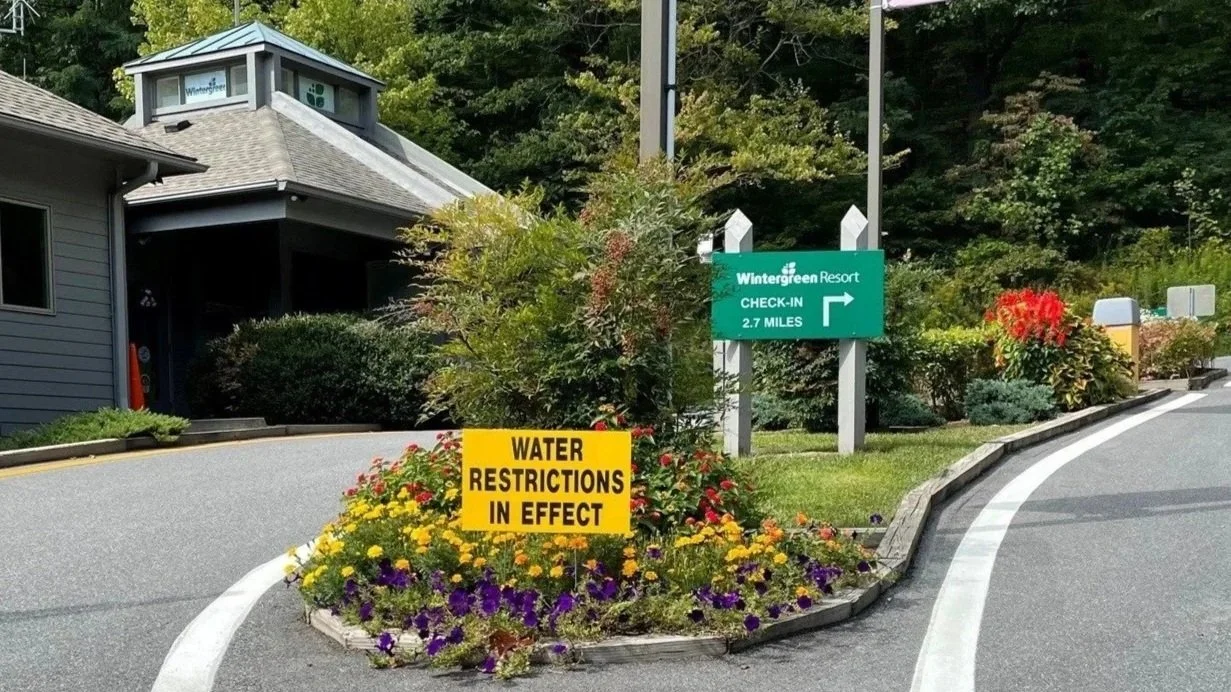
When valley lake water storage levels below 80 percent (usually because of dry weather), voluntary water restrictions are put into place for all mountain properties. The restrictions end once water levels in the valley’s lakes return to normal. With the cooperation of property owners over several decades, WPOA, Wintergreen Resort, and Nelson County Service Authority have a record of successfully managing the community water resources.
Supplying the Wintergreen’s mountain community with drinking water was one of the first challenges the original developer needed to overcome. Water required to serve recreational amenities including mountain-top golf and snowmaking added to the challenge. The solution to the problem relies on a combination of mountain wells and water storage ponds in Stoney Creek. The storage ponds in Stoney Creek are connected to the mountain through a series of pipes and pumping stations.
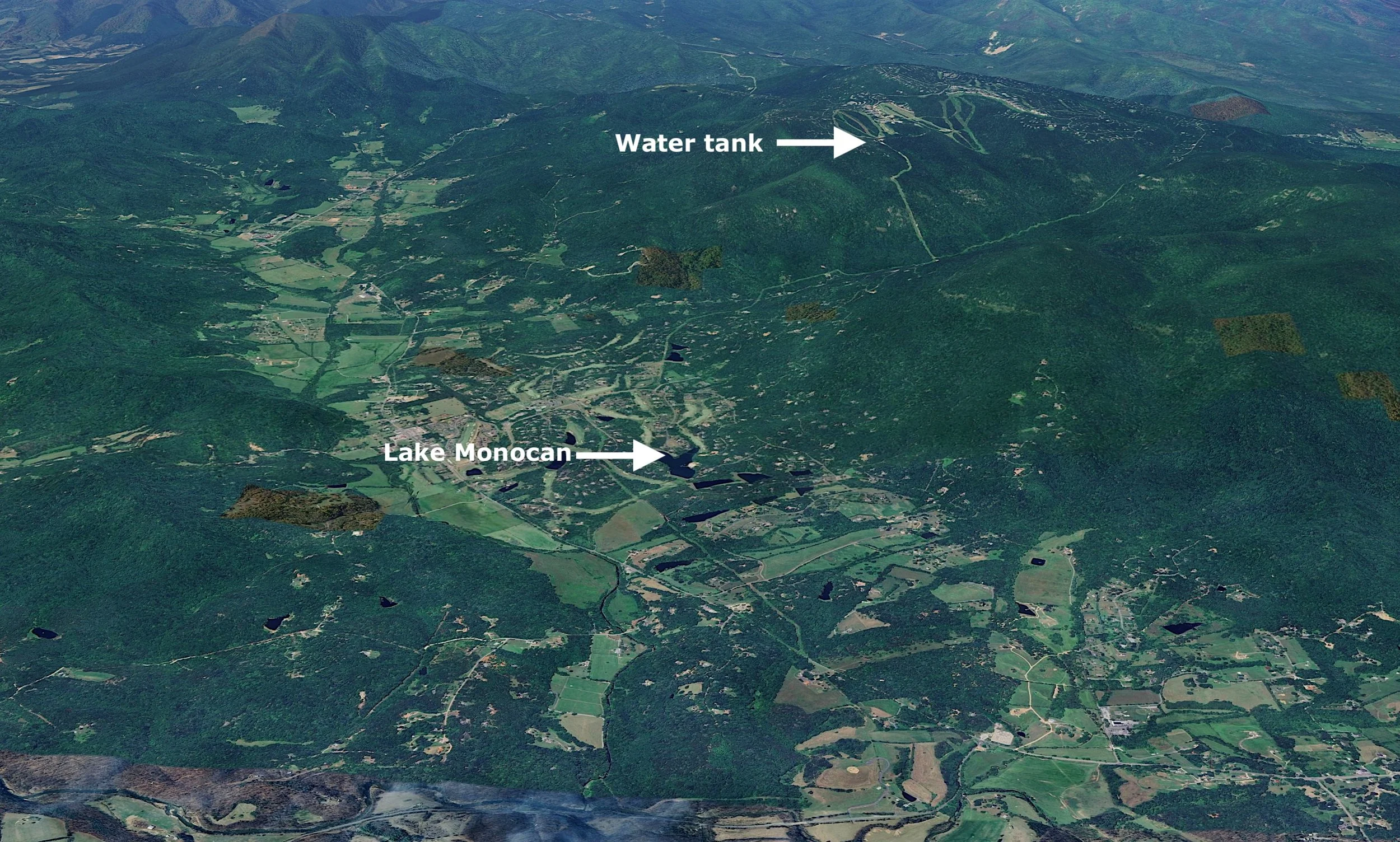
With normal rainfall, the water storage capacity in the Stoney Creek Ponds is adequate. During periods of drought and/or high demand, pond levels go down to meet the community needs. Rain events and reduced demand allow pond levels to quickly recover. Managing the water resources is done through a 3-party agreement between WPOA, Wintergreen Resort, and the Nelson County Service Authority. All three share in the responsibility to manage the community water resources.
The largest consumer of water at one time involves snowmaking operations. During the winter months, the snow making system can consume 2,700 gallons of water per minute from Lake Monocan. Normal stream water flow into Lake Monacan is sufficient to keep lake water levels fairly constant. During periods of drought, however, lake levels can drop significantly, and remain low, until rain return lake levels to normal. (The snowmaking system might run 24 hours a day for weeks at a time if the weather is cold.)
In December 2025 the resort’s snowmaking system was running 24 hours a day and stream water in-flow did not keep up. Recent natural snow was great for ski operations, however, it needs to melt to help with stream water flow.
Occasional rain events are not ideal for ski operations, but, they help replenish snowmaking and drinking water reserves. The valley pond water levels dropped below 80 percent (combined capacity, approximately 80 million gallons in storage), triggering voluntary water restrictions on the mountain.
This is not an abnormal situation; we have been here numerous times before. The Winter of 2017-2018 created a very similar situation. WPOA, Wintergreen Resort, and Nelson County Service Authority have decades of experience managing the community water resources and are counting on all of you to support the effort. Please conserve.
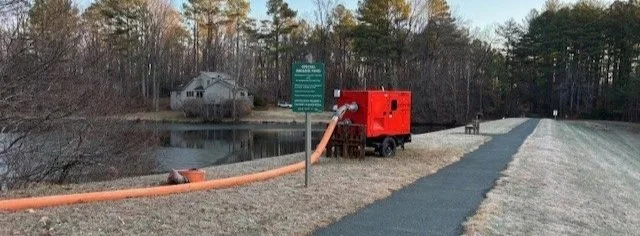
In December 2025 Wintergreen Resort placed a pump at the Trout Pond in the valley. If needed, this pump can transfer water from the Trout Pond and the two ponds directly above. Trout Pond remained open for fishing.